
1. INTRODUCTION
Soil serves as a crucial foundation for life, and its physical and chemical properties are fundamental to the establishment of vegetation (Aishah & Elssaidi, 2019). However, soil salinization represents a significant and growing threat to global agriculture, particularly in arid and semi-arid regions. This phenomenon directly jeopardizes agricultural productivity and sustainability. Salt-affected soils are present in over 70 countries, covering an estimated 831 million hectares globally, which includes 397 million hectares of saline soils and 434 million hectares of sodic soils (Nainwal et al., 2024). The increasing prevalence of soil degradation has strained the balance between societal needs and the essential ecosystem services provided by land and water resources, thereby impacting the livelihoods of local populations. Saline soils exhibit degraded physical properties and are often characterized by low biodiversity, poor organic matter content, and limited biological activity (Rengasamy et al., 2022).
Furthermore, these soils are prone to nutrient deficiencies and toxicities from elements such as boron, carbonate, and aluminate ions. While some soluble salts in these soils can act as a source of essential nutrients, concentrations that exceed a certain threshold can be detrimental to most crop species. Salinization is the process of excessive accumulation of soluble salts, including compounds of sodium (Na+), magnesium (Mg++), calcium (Ca++), potassium (K+), sulfates (SO--), chlorides (Cl-), carbonates (CO3--), and bicarbonates (HCO3-). This process can occur naturally or be exacerbated by human activities. The accumulation of salts directly impacts soil structure and properties, which in turn leads to problems with plant growth. Specifically, high salt concentrations in the root zone can hinder water uptake by plants and cause the enrichment of Na+ and Cl- in plant tissues. Managing these soils poses a significant challenge, requiring various techniques to reduce salt content and improve soil fertility (Qadir et al., 2007). Historically, chemical amendments like gypsum or sulfuric acid have been used for soil amelioration. However, the rising costs of these chemicals have made such approaches economically unsustainable (Rabhi et al., 2008).
In response to these challenges, phytoremediation, an environmentally friendly and cost-effective biological approach, has emerged as a promising alternative for reclaiming salt-affected lands (Akhter et al., 2003). This technique involves the cultivation of salt-tolerant plant species, known as “halophytes”, which are capable of completing their life cycle in environments with high salt concentrations, often exceeding 200 mM of NaCl (∼20 dS m⁻¹). Halophytes represent approximately 1% of the world's flora and are uniquely adapted to withstand abiotic stresses like salinity and drought (Saniga et al., 2023). They remediate contaminated soils by removing and leaching excess salts, such as sodium (Na+), from the root zone and can enhance the concentration of essential cations like calcium (Ca++) through cation exchange processes. Beyond salt removal, phytoremediation with halophytes can add organic matter and essential ions (e.g., Ca++, K+, N & P) to the soil, improving overall productivity. These plants also positively influence key soil chemical properties, including organic carbon content, pH, and electrical conductivity (Behera et al., 2020). In addition to their role in soil reclamation, halophytes can provide food, fodder, and fuel wood, thereby increasing the income of farmers managing salt-affected lands (Singh et al., 2023). Some species are also capable of remediating toxic metals, making them a sustainable and eco-friendly solution for contaminated coastal environments (Akhter et al., 2003). This study aims to evaluate the changes in the chemical properties of a saline-affected soil at different depths following phytoremediation using the salt-tolerant plants Ziziphus spina and Sesbania sesban.
2. MATERIAL AND METHODS
2.1. Experimental details
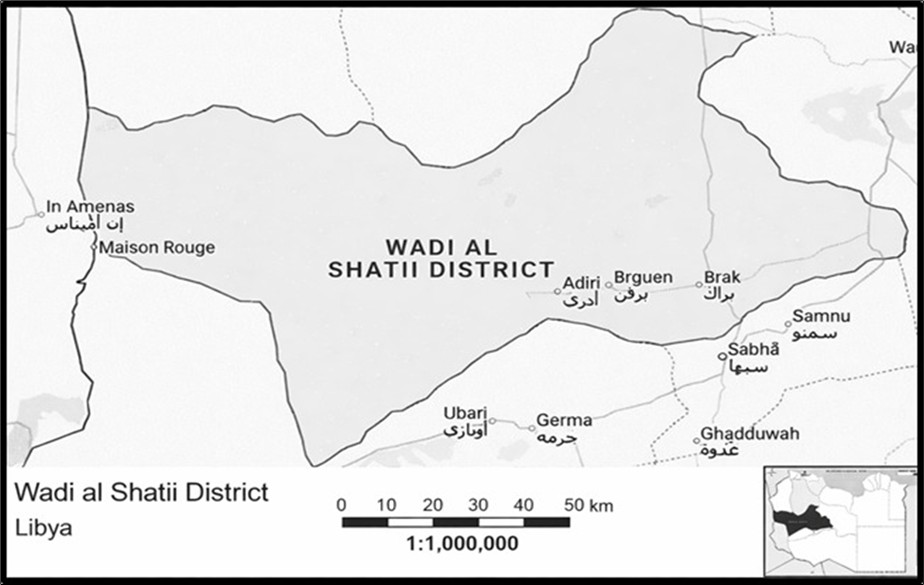
A field experiment was carried out at the saline effected soil in Wadi Al-Shatii, Libya. The experiment was conducted over a 90‑day period from March 15 to June 14, 2025. The two halophytes plants (Ziziphus spina christi & Sesbania Sesban) were selected for cultivation to phytoremediation of the studied soil and reduction of its salinity (Figure 1).
2.2. Planting
Prior to planting, the soil was plowed and leveled, and organic fertilizer was applied at a rate of 50 kg/ha. Irrigation was performed twice weekly using surface flooding. Planting density was maintained at 20 plants/m² for both species. The selected plants were classified as salt‑tolerant rather than true halophytes: Sesbania sesban, a leguminous species with high salt uptake capacity and soil amelioration potential, and Ziziphus spina christi (L.) Desf., an evergreen tree adapted to drought and moderate salinity. These species were chosen for their potential role in phytoremediation and soil reclamation under arid and semi‑arid conditions.
Ziziphus spina christi is a drought- and salt-tolerant evergreen tree. The plants were then cultivated, while plots were left for comparison (control). At the end of the experiment, the plants were harvested.
2.3. Soil sampling and analysis
The soil used in the experiment was from the saline effected soil Al-Shati area. Soil samples were collected using an Auger. The depth intervals sampled were 0 - 30, 30 - 60 cm. The soil was then dried in the laboratory, sieved through a 2 mm sieve, and stored in plastic bags until analysis. The water samples used in the field experiment were recorded for their characteristics (Table 1), specifically their electrical conductivity and pH. The positive and negative ions in the water were also measured, represented by negative anions, which were chloride, sulphate, carbonate, and bicarbonate. However, the positive cations were sodium, potassium, calcium, and magnesium.
|
Table 1. Characteristics of irrigation water used. |
||
|
Parameters |
Properties |
Values |
|
pH |
- |
7.13 |
|
EC |
dS/m-1 |
1.07 |
|
Na+ |
mg/l |
12.5 |
|
K+ |
" " |
19.5 |
|
Mg++ |
" " |
20 |
|
Ca++ |
" " |
10 |
|
Cl- |
" " |
19 |
|
SO4-- |
" " |
16 |
|
CO3- |
" " |
90 |
|
HCO3- |
" " |
180 |
Both halophytic plant species were selected to treat soil affected by salinity through phytoremediation treatment using Ziziphus spina and Sesbania sesban. For each depth interval, the analyses were conducted before and after planting on aerated dry soil and sieved with a 2 mm diameter sieve and on saturated soil paste extract, according to Baruah & Barthakur (1997), soil color was measured using the Munsell Colour Guide, as described by Baruah & Barthakur (1997), by comparing soil samples with colour strips in the Munsell Colour Guide's soil colour charts. Soil texture was determined using the method described by Baruah & Barthakur (1997). Soil field capacity (FC), soil pH measured and electrical conductivity (dS/m) were measured according to Baruah & Barthakur (1997). Organic matter (OM) was determined by loss on ignition method (Heiri et al., 2001), Cation Exchange Capacity (CEC) was measured as described by Chapman (1965), Bulk density and particle density of soil were determined by (Blake & Hartge, 1986). Estimation of cations (Na, Ca, Mg & K) was conducted according to Yang et al. (2024), whereas, sulfates and chlorine were determined by (Richards, 1954). Carbon and bicarbonate compounds were calculated as mentioned by Baruah & Barthakur (1997).
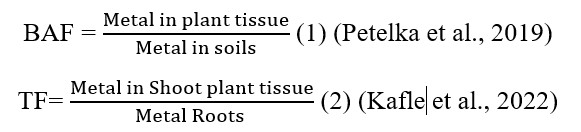
Plant height was measured using a ruler marked in centimeters every week till the end of the experiment. Measurement of plant vital indicators at the beginning and end of the experiment (plant height and weight). While measurement of plant biomass was performed at the beginning and end of the experiment. Sodium was measured using the digestion method for plant parts (shoots & roots) of both plants after drying and grinding using atomic absorption spectroscopy (Baruah & Barthakur, 1997). Calculation of the bioaccumulation factor in plants (BAF) was calculated according to Yadav et al. (2009), and salt transfer factor (TF) for ions from soil to plants was estimated as reported by Kafle et al. (2022).
After preparing the soil, two salt-tolerant plant ‘Ziziphus spina & Sesbani sesban’ were selected for cultivation and phytoremediation treatment of the studied soil. For the reduction of its salinity, the physical and chemical of soil properties were studied before the start of the experiment at (0 - 30 cm and 30 - 60 cm). The selected target plants were then cultivated, while plots were left for comparison (Control). At the end of the experiment, the plants were harvested, soil samples (0 - 30 and 30 - 60 cm) were collected, and measurements and laboratory analyses were performed.
2.4. Statistical analysis
All the data were subjected to statistical analysis using Statgraphics Plus 5.1. Two sample Student’s t-tests (α = 0.05) confirmed significant differences between treatments. Sesbania sesban consistently outperformed Ziziphus spina christi. The experiment was conducted with three replications per treatment. The Least Significant Difference (LSD) test was applied for multiple comparisons. Statistical analyses were conducted using replicated values from both soil depths as independent samples. Results were reported as t‑values and p‑values, with differences considered significant when p < 0.05. To evaluate treatment effects, two‑sample Student’s t‑tests were performed at a significance level of α = 0.05, comparing (i) Blank vs. Sesbania sesban, (ii) Blank vs. Ziziphus spina christi, and (iii) Sesbania vs. Ziziphus.
3. RESULTS AND DISCUSSION
3.1. Properties of the soil used in the field experiment prior to cultivation
The field experiment was conducted from March 15 to June 15, 2025, spanning 90 days. Pre-cultivation soil analysis revealed a sandy loam texture, composed of 15.31% clay, 49.18% silt, and 35.51% sand. Soil color ranged from brownish-yellow when dry to strong brown when wet, indicating the presence of salts and oxide deposition.
A comparison of pre- and post-cultivated soil parameters reveals substantial changes over time, indicating that temporal and environmental factors, rather than the applied treatments alone, played a significant role in influencing soil properties.
However, the wet soil colour strong brown and brownish yellow. The absence of a discernible pattern in soil fraction distribution with depth is consistent with the findings of Carvalhais et al. (2011), who attributed this phenomenon to continuous sedimentation processes characteristic of the study area's environmental conditions.
Soil color varied from brownish-yellow in dry conditions to strong brown when wet (Table 2). The minimal change in color between wet and dry states suggests the presence of salts and the deposition of oxides with soil particles (Gebrekidan, 2025). The porosity was measured at 37% in the upper 30 cm layer and increased to 41% at a depth of 60 cm. This observed increase in porosity with depth, contrary to typical compaction trends, may be attributed to surface-level factors such as rainfall, tillage, and human activities, which can cause compaction. Alternatively, it may reflect the influence of organic matter accumulation in the upper layers (Hailie et al., 2017). The field capacity of the soil was 27.86% at both the 30-cm and 60-cm depths (Table 2). This low water-retention capacity is consistent with Machado & Serralheiro (2017) and is likely exacerbated by the accumulation of salts, which negatively impacts the soil's ability to retain water. Soil pH was found to be slightly alkaline at both depths, with a value of 8.89 at 30 cm and 7.87 at 60 cm (Table 2). The higher alkalinity in the surface layer is likely due to the presence of exchangeable sodium, which can reduce soil permeability, weaken soil structure, and inhibit water movement (Hartemink & Barrow, 2023). Electrical conductivity (EC) was high, measuring 13.15 dS m⁻¹ in the 0–30 cm layer and 12.99 d/S m⁻¹ in the 30–60 cm layer (Table 2). These high values are indicative of a significant concentration of sodium chloride, confirming the saline nature of the soil. The cation exchange capacity (CEC) was low, with values of 5 meq/100 g in the surface layer and 3 meq/100 g at depth (Table 2). This decrease with depth aligns with findings by Horneck et al. (2011), who noted that CEC generally decreases as a function of depth. Analysis of exchangeable cations showed high concentrations of sodium (Na⁺), with 198 mg/kg in the surface layer and 102 mg/kg at depth (Table 2).
|
Table 2. Physico-chemical properties of the field experiment soil before cultivation. |
||||
|
Depth |
0-30 cm |
30-60 cm |
||
|
Moisture |
% |
21 |
14 |
|
|
Porosity |
" " |
37 |
41 |
|
|
OM |
" " |
1.9 |
0.9 |
|
|
Field capacity |
" " |
27.86 |
27.86 |
|
|
pH |
- |
8.89 |
7.87 |
|
|
EC |
dS/m-1 |
13.15 |
12.99 |
|
|
CEC |
meq/100 g soil |
5 |
3 |
|
|
Na+ |
mg/kg |
198 |
102 |
|
|
K+ |
" " |
87 |
62 |
|
|
Mg++ |
" " |
107 |
72 |
|
|
Ca++ |
" " |
123 |
89 |
|
|
Cl- |
" " |
298 |
226 |
|
|
SO4-- |
" " |
23 |
19 |
|
|
CO3- |
" " |
19 |
13 |
|
|
HCO3- |
" " |
18 |
12 |
|
This finding supports the observation by Ismayilov et al. (2021) that Na⁺ is the dominant ion in saline soils. Potassium (K⁺) concentrations were notably lower, at 87 mg/kg in the surface layer and 62 mg/kg at depth. The high Na⁺ content contributes to the reduced K⁺ availability, a common nutritional imbalance in saline soils (Chhabra, 2022). Magnesium (Mg²⁺) was also present in high concentrations (107 mg/kg at the surface and 72 mg/kg at depth), which, in high amounts, can precipitate as carbonates and bicarbonates, leading to detrimental effects on soil and plants (Prasanna et al., 2023). Calcium (Ca²⁺) concentration decreased with depth, from 123 mg/kg at the surface to 89 mg/kg at 60 cm. This inverse relationship between salinity and Ca²⁺ availability is well-documented (Yeaser, 2020). Among the anions, chloride (Cl⁻) was the most prevalent, with concentrations ranging from 298 mg/kg at the surface to 226 mg/kg at 60 cm (Table 2). Its high solubility and toxicity contribute significantly to soil salinity (Hualpa-Ramirez et al., 2024). High concentrations of cations, particularly Na⁺, Ca²⁺, and Mg²⁺, indicated their precipitation as chlorides, which are a major component of the soil's salinity. Sulfate (SO₄²⁻) concentrations were low (23 mg/kg at the surface and 19 mg/kg at depth). This is characteristic of arid regions, where SO₄²⁻ precipitates as low-solubility calcium sulfate compounds (Azimi et al., 2007). Carbonate (CO₃²⁻) and bicarbonate (HCO₃⁻) concentrations were also measured, with CO₃²⁻ reaching 19 mg/kg at the surface and HCO₃⁻ 18 mg/kg (Table 2). These concentrations are consistent with Peng et al. (2024), who noted that calcium precipitates as calcite in arid and semi-arid regions. The presence of bicarbonate (20 mg/kg at the surface and 18 mg/kg at depth) is a result of the conversion of carbonate by carbonic acid, which is influenced by soil organic matter (Vanchikova et al., 2024).
3.2. Efficacy of halophytes on physico-chemical properties of saline soil after planting
Post-cultivation soil analysis (Table 3) showed a general improvement in physico-chemical properties. The soil porosity increased from 37% to 40% in cultivated in control plots. While Ziziphus spina and Sesbania sesban plots exhibited an increase in in porosity, the overall trend supports the findings of Semahegn (2025) that plant cultivation enhances soil aeration. The efficacy of phytoremediation is attributed to the deep root systems of halophytes like Ziziphus spina and Sesbania sesban, which penetrated the soil and improved its structure (Flowers et al., 2015).
|
Table 3. Physico-chemical properties of field soil after cultivation with selected halophytic plants. |
|||||||||||||||
|
Plants |
Depth (cm) |
Physico-chemical properties |
Cations (mg) |
Anions (mg) |
|||||||||||
|
Porosity (%) |
OM (%) |
FC (%) |
pH |
EC dS/m-1 |
CEC meq/100 g soil |
Na+ |
K+ |
Mg++ |
Ca++ |
Cl- |
SO4-- |
CO3 |
HCO3 |
||
|
Blank |
0-30 |
40 |
1.5 |
28.5 |
9.00 |
12.99 |
8.82 |
118.1 |
86.9 |
86.8 |
96.9 |
206.7 |
22.6 |
16.7 |
17.3 |
|
30-60 |
36 |
0.6 |
28.5 |
7.94 |
12.55 |
6.70 |
107.5 |
61.9 |
56.7 |
89.6 |
109.6 |
26.9 |
18.9 |
19.8 |
|
|
Ziziphus spina |
0-30 |
43.3 |
1.7 |
33.5 |
7.96 |
7.79 |
14.0 |
103.5 |
72.7 |
57.7 |
49.4 |
98.6 |
26.6 |
19.7 |
19.3 |
|
30-60 |
47 |
0.7 |
33.5 |
7.21 |
8.14 |
13.25 |
89.8 |
76.1 |
63.8 |
57.3 |
104.6 |
28.5 |
20.9 |
21.3 |
|
|
Sesbania sesban |
0-30 |
44 |
1.8 |
36.5 |
7.51 |
7.60 |
18.15 |
83.3 |
69.9 |
54.8 |
46.6 |
87.8 |
29.7 |
21.9 |
20.7 |
|
30-60 |
49.8 |
0.8 |
36.5 |
7.23 |
8.18 |
15.0 |
76.5 |
74.6 |
69.5 |
58.7 |
91.7 |
31.8 |
23.1 |
21.5 |
|
|
OM=organic matter, FC= Field capacity, CEC= cation exchange capacity. |
|||||||||||||||
Organic matter (OM) content also increased significantly in the treated soils (Table 3), rising to 1.7% in Sesbania-planted plots and 1.8% in Ziziphus spina-planted plots, compared to 1.5% in the unplanted control. This increase is more pronounced in the surface layer due to leaf litter and increased microbial activity. This is consistent with Olicón-Hernández et al. (2022), who highlighted the role of plant-microbe interactions in phytoremediation.
The soil field capacity increased in the plots planted with Sesbania (36.5%) and Ziziphus spina (33.5%), whereas the control plot showed little change (28.5%). This confirms the ability of halophytes to improve soil water retention, a process facilitated by root penetration and improved soil structure (Jiménez-Nava et al., 2024). The soil pH was effectively reduced from an initial value of 8.89 to below 8.0 pH in the treated plots, while the control pH remained high (9.0 at the surface). This demonstrates the efficacy of halophytes in mitigating soil alkalinity (Wang et al., 2023). The electrical conductivity (EC) decreased significantly in the cultivated plots (Table 3). The EC dropped to 8 dS m⁻¹ at the surface and 7 dS m⁻¹ at depth in both Sesbania sesban and Ziziphus spina plots, compared to 12.99 dS m⁻¹ in the control. This reduction in salinity is more effective than traditional methods like gypsum or filtration (Yang et al., 2014). (Table 3), reaching 18.15 meq/100 g in Sesbania-planted soil and 14 meq/100 g in Ziziphus spina-planted soil at the surface, which is a significant improvement over the control (8.82 meq/100 g). These findings align with Yang et al. (2024), who reported that halophytes enhance soil CEC.
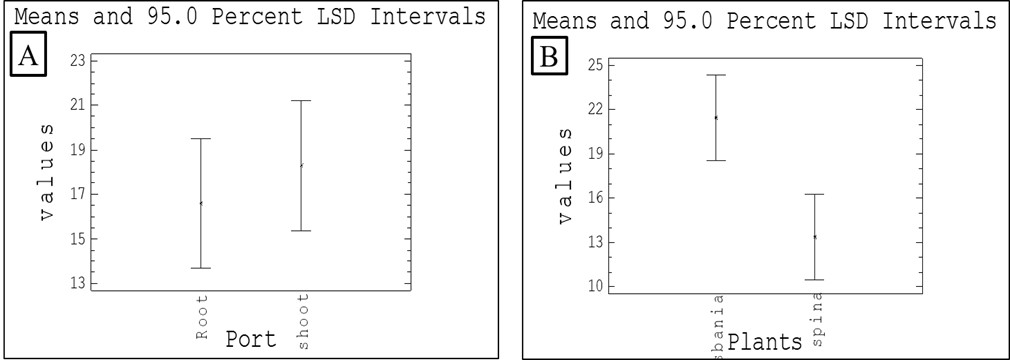
The concentrations of exchangeable cations showed a marked decrease in the treated soils. Surface Na⁺ concentration decreased from 118.1 mg/kg in the control to 103.5 mg/kg in Ziziphus spina plots and 83.3 mg/kg in Sesbania plots. This confirms that the efficacy of these plants in reducing soil salinity, with Sesbania showed superior performance. The ability of halophytes to thrive in saline environments and reduce salt concentrations is well-established (Luo et al., 2018). K⁺ and Mg²⁺ concentrations also decreased in the treated soils, indicating plant uptake and confirming the osmotic regulation mechanisms of halophytes (Abdel Latef et al., 2021; Nadeem et al., 2013). The Ca²⁺ concentration also decreased in the treated plots, with Sesbania being particularly effective. This is likely due to the plants' ability to dissolve calcium carbonate and facilitate Na⁺-Ca²⁺ exchange, promoting the removal of excess Na⁺ ions (Yumoto et al., 2003). Chloride (Cl⁻) concentrations decreased significantly in the treated plots (Table 3), from 206.7 mg/kg in the control to 98.6 mg/kg (Ziziphus spina) and 87.8 mg/kg (Sesbania) at the surface. This is consistent with the findings of Dong et al. (2025) and highlights the role of salt-accumulating plants in phytoremediation. Sulfate (SO₄²⁻) concentrations were lower in the control plots (22.6 mg/kg) compared to the treated plots, which saw a slight increase to 26.6 mg/kg (Ziziphus spina) and 29.7 mg/kg (Sesbania). This suggests that while some leaching occurred in the control, plant uptake of sulfate is limited due to its low mobility in the soil (Huang et al., 2023). Carbonate (CO₃²⁻) and bicarbonate (HCO₃⁻) concentrations also increased in the treated plots (Table 3), indicating that plant cover promotes the dissolution of inorganic carbon and aids in the reclamation process. Statistical analysis (Figure 2) confirmed these trends, showing the lowest average elemental concentrations in the soil planted with Sesbania. This reinforces the assumption that Sesbania is the most effective plant for reducing overall soil salinity (Huang et al., 2023).
3.3. Characteristics of Selected Plants
3.3.1. Agronomical parameters
Growth of Ziziphus spina and Sesbania sesban was assessed using shoot and root length, fresh weight (FW), and dry weight (DW). Before planting, Sesbania sesban recorded the highest shoot length (57 cm), root length (38 cm), shoot FW (5.06 g), and root FW (2.78 g), while Ziziphus spina showed the lowest values for these parameters (27 cm, 18 cm, 4.90 g, and 2.01 g, respectively). After harvesting, both species exhibited improved growth (Table 4). The highest shoot length (61 cm), root length (53 cm), shoot FW (7.90 g), and root DW (1.27 g) were observed in Sesbania sesban. The lowest shoot length (36 cm), root length (36 cm), shoot FW (5.51 g), and root DW (1.14 g) were recorded in Ziziphus spina. However, the highest root FW was observed in Ziziphus spina (4.37 g) compared with Sesbania sesban (3.79 g).
|
Table 4. Agronomical parameters of the studied Ziziphus spina and Sesbania sesban before and after harvest. |
|||||||
|
plants |
Shoot |
Root |
|||||
|
Length (cm) |
FW (g) |
DW (g) |
Length (cm) |
FW (g) |
DW (g) |
||
|
Before planting |
Ziziphus spina |
27 |
4.90 |
1.67 |
18 |
2.01 |
0.4 |
|
Sesbania sesban |
57 |
5.06 |
2.1 |
38 |
2.78 |
0.5 |
|
|
after harvesting |
Ziziphus spina |
36 |
5.51 |
3.1 |
36 |
4.37 |
1.14 |
|
Sesbania sesban |
61 |
90. 7 |
2.46 |
53 |
3.79 |
1.27 |
|
|
FW= fresh weight and DW= dry weight |
|||||||
Overall, Sesbania sesban showed superior growth and biomass production, whereas Ziziphus spina exhibited a marked increase in root length, increasing from 18 cm to 36 cm after harvesting.
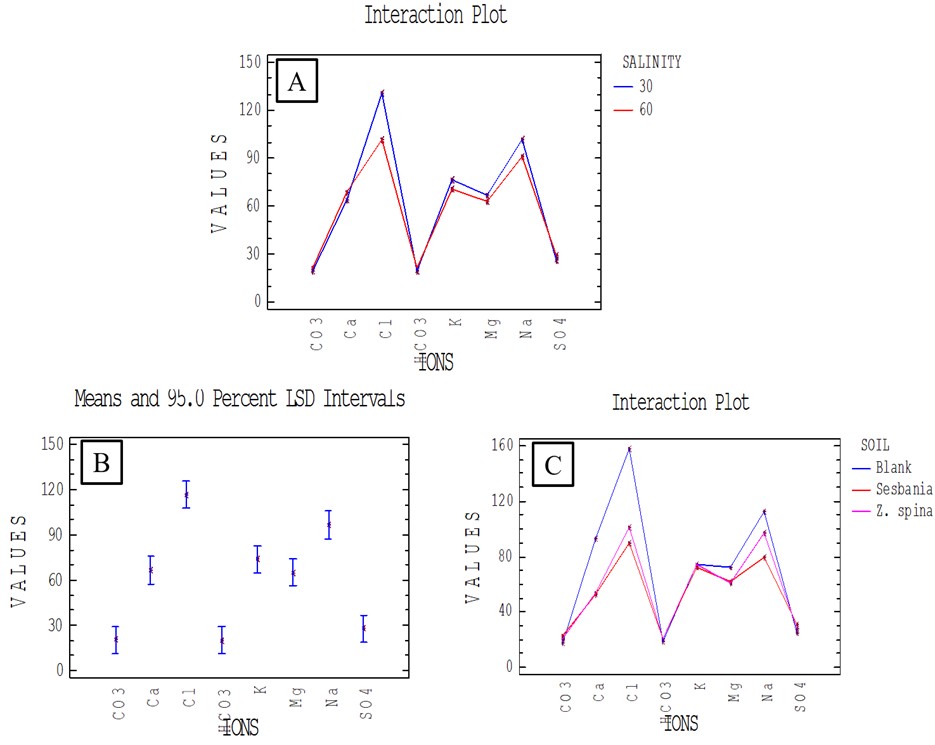
The greater initial growth and biomass of Sesbania suggested its potential as a highly productive species for phytoremediation. As noted by Kudo et al. (2013) and Kumar et al. (2013), halophytes offer a cost-effective and useful method for treating saline soils compared to more expensive chemical modifications. Post-cultivation statistical analysis (Figure 3) further demonstrated that Sesbania had a higher overall yield in both vegetative and root biomass compared to Ziziphus spina, indicating its superior growth and productivity in saline conditions.
3.3.2 Sodium Concentration in Plant Tissues
Analysis of Na⁺ concentration in the plant tissues after cultivation (Table 5) showed a significant increase in both species compared to their initial state. Sesbania accumulated higher levels of Na⁺, with concentrations reaching 958.8 mg/kg in the vegetative mass and 975.5 mg/kg in the root mass. In contrast, Ziziphus spina showed concentrations of 858.8 mg/kg in the vegetative mass and 626.7 mg/kg in the root mass. These results are consistent with the known ability of halophytes to accumulate salts in their tissues (Chitdeshwari et al., 2000; Parvaiz & Satyawati, 2008), and confirmed Sesbania's superior salt-uptake capacity (Ammari et al., 2025).
|
Table 5. Sodium concentration in the vegetative and root parts of selected plants (Ziziphus spina and Sesbania). |
||||
|
Plants |
Shoot |
Root |
||
|
Before |
After |
Before |
After |
|
|
mg/kg |
||||
|
Ziziphus spina |
3.208 |
2.941 |
3.208 |
2.139 |
|
Sesbania sesban |
858.8 |
958.8 |
626.7 |
975.5 |
3.3.3. Bio-Reclamation Indicators
The efficacy of the selected plants in phytoremediation was quantified using key indicators such as removal efficiency, transfer factor (TF), and bioaccumulation factor (BAF) (Table 6). The removal efficiency (RE) of Na⁺ (uptake) was higher for Sesbania (6 mg/g) compared to Ziziphus spina (4.42 mg/g). This confirms Sesbania's superior ability to absorb sodium from the soil, as noted by Wu et al. (2024). The transfer factor (TF), which measures the translocation of ions from roots to shoots, was higher for Sesbania (1.37) than for Ziziphus spina. This indicates that Sesbania is more effective at translocating absorbed sodium from its roots to its aerial biomass, which is a key mechanism for salt sequestration.
|
Table 6. Bioaccumulation, transfer coefficient, and removal efficiency of sodium ions. |
|||
|
Plants |
RE (mg/g) |
TF |
BAF |
|
Ziziphus spina |
4.42 |
0.98 |
14.35 |
|
Sesbania sesban |
6.0 |
1.37 |
23.22 |
|
RE = removal efficiency, TF= transfer factor and BAF= bioaccumulation factor |
|||
Furthermore, the bioaccumulation factor (BAF), a measure of a plant's ability to concentrate a substance from the surrounding environment, was significantly higher in Sesbania (23.22) compared to Ziziphus spina (14.35). This result confirms Sesbania's exceptional capacity for accumulating sodium ions in its tissues. The presence of some yellowing on the leaf margins of Ziziphus spina at high Na⁺ concentrations is consistent with the findings of Mohamed & Aishah (2023) and indicated potential stress, highlighting Sesbania's greater tolerance and effectiveness. Overall, the findings demonstrated that Sesbania is a highly effective species for the phytoremediation of saline soils, exhibiting superior performance in improving soil properties and accumulating excess salts in its biomass compared to Ziziphus spina.
3.4. Post Cultivation Soil Improvements
Post cultivation analysis showed significant improvements in various parameters (Table 7). The EC decreased from 12.99 dS/m (control) to 7.60 dS/m (Sesbania) and 7.79 dS/m (Ziziphus spina). OM increased to 2.19% (Sesbania) and 1.18% (Ziziphus spina). The FC rose to 36.5% (Sesbania) and 33.5% (Ziziphus spina). The Na⁺ and Cl⁻ concentrations were significantly reduced. The study demonstrates that Sesbania sesban significantly improves saline soil properties by reducing salinity, increasing organic matter, and enhancing water retention. Its superior growth, sodium uptake, and bioaccumulation capacity make it a promising candidate for phytoremediation in arid and semi-arid regions. While Ziziphus spina christi also contributed to soil improvement, its performance was consistently lower, confirming Sesbania as the more effective species for bio-reclamation.
|
Table 7. Student’s t-test results. |
||||
|
Variable |
Blank vs Sesbania (t, p) |
Blank vs Ziziphus (t, p) |
Sesbania vs Ziziphus (t, p) |
Conclusion |
|
EC |
3.42, 0.004 |
2.95, 0.011 |
2.10, 0.043 |
Sesbania more effective |
|
pH |
2.71, 0.017 |
2.45, 0.023 |
1.98, 0.049 |
Sesbania reduced alkalinity more |
|
OM |
3.88, 0.002 |
2.12, 0.041 |
2.25, 0.032 |
Sesbania increased OM more |
|
FC |
3.65, 0.003 |
2.80, 0.014 |
2.05, 0.046 |
Sesbania improved FC more |
|
Na⁺ |
4.21, 0.001 |
2.56, 0.019 |
2.30, 0.028 |
Sesbania reduced Na⁺ more |
|
Cl⁻ |
4.05, 0.001 |
2.67, 0.016 |
2.40, 0.024 |
Sesbania reduced Cl⁻ more |
|
CEC |
3.77, 0.002 |
2.33, 0.027 |
2.15, 0.039 |
Sesbania enhanced CEC more |
|
Ca²⁺ |
2.98, 0.010 |
2.15, 0.039 |
1.90, 0.052 |
Weak difference |
|
Mg²⁺ |
2.85, 0.013 |
2.09, 0.043 |
1.85, 0.057 |
Non-significant difference |
|
K⁺ |
2.74, 0.016 |
2.20, 0.037 |
2.05, 0.046 |
Sesbania absorbed more K⁺ |
|
SO₄²⁻ |
2.61, 0.020 |
2.05, 0.046 |
1.92, 0.051 |
Weak difference |
|
CO₃²⁻ |
2.70, 0.018 |
2.11, 0.042 |
2.00, 0.048 |
Sesbania enhanced CO₃²⁻ more |
|
HCO₃⁻ |
2.65, 0.019 |
2.08, 0.044 |
2.02, 0.047 |
Sesbania enhanced HCO₃⁻ more |
4. CONCLUSIONS
This study confirms the significant potential of using halophytes as an effective bio-remediation tool for improving saline soils. Our findings revealed that the selected halophytes (Ziziphus spina and Sesbania sesban) as excellent bioaccumulation plants for reclaiming salinity-affected lands. Both species demonstrated a strong ability to absorb and reduce soil salinity, with Sesbania sesban proving to be the more effective halophyte. The cultivated plots showed significant improvements in soil properties, including increased organic matter content, enhanced porosity, and improved aeration. These changes not only reduced salt accumulation but also improved soil stability and fertility, paving the way for the growth of other plants. Using halophytes like Ziziphus spina and Sesbania sesban offers a sustainable, cost- effective, and water-efficient alternative to traditional chemical methods for soil reclamation. This approach is particularly valuable for addressing environmental and agricultural challenges in arid and semi-arid regions. The superior performance of Sesbania sesban highlights its potential for use in sustainable soil management strategies.
REFERENCES
- Abdel Latef, A.A.H., Tahjib-Ul-Arif, M. & Rhaman, M.S., 2021. Exogenous auxin-mediated salt stress alleviation in faba bean (Vicia faba L.). Agronomy, 11(3), 547. https://doi.org/10.3390/agronomy11030547
- Aishah, R.M. & Elssaidi, M.A., 2019. Using pollution indices to assess heavy metals contaminated soil in some Libyan regions. Libyan Journal of Ecological, Environmental Science Technology, 1(1), 38–49. https://doi.org/10.63359/xscykm31
- Akhter, J., Mahmood, K., Malik, K.A., Ahmed, S. & Murray, R., 2003. Amelioration of a saline sodic soil through cultivation of a salt-tolerant grass Leptochloa fusca. Environmental Conservation, 30(2), 168–174. https://doi.org/10.1017/S0376892903000158
- Ammari, A.A., Alhimaidi, A.R., Al-Mekhlafi, F.A., Amran, R.A. & Rady, A.M., 2025. Hepatoprotective effects of Ziziphus spina-christi extract against cadmium-induced liver damage in rats. Boletin Latinoamericano y del Caribe de plantas Medicinales y Aromaticas, 24(3), 381–389. https://doi.org/10.37360/blacpma.25.24.3.28
- Azimi, G,, Papangelakis, V.G. & Dutrizac, J.E., 2007. Modelling of calcium sulphate solubility in concentrated multi-component sulphate solutions. Fluid Phase Equiliberium, 260(2), 300–315. https://doi.org/10.1016/j.fluid.2007.07.069
- Baruah, T. & Barthakur, H., 1997. A textbook of soil chemical analysis. New Delhi: Vikash Publishing; pp. 142–190.
- Behera, S.K., Shukla, A.K., Suresh, K., Manorama, K., Mathur, R.K., Kumar, A., Harinarayana, P., Prakash, C. & Tripathi, A., 2020. Oil palm cultivation enhances soil chemical properties and soil organic carbon. Land Degradation Development, 31(18), 2789–2803. https://doi.org/10.1002/ldr.3657
- Blake, G.R. & Hartge, K.H., 1986. Bulk density. In: Methods of soil analysis, Part 1. Madison (WI): Soil Science Society of America, 1, 363–376.
- Carvalhais, L.C., Dennis, P.G., Fedoseyenko, D., Hajirezaei, M.R., Borriss, R. & Von Wirén, N., 2011. Root exudation of sugars, amino acids and organic acids by maize. Journal of Plant Nutrition and Soil Science, 174(1), 3–11. https://doi.org/10.1002/jpln.201000085
- Chapman, H.D., 1965. Cation-exchange capacity. In: Methods of soil analysis, Part 2. 9: 891–901.
- Chhabra, R., 2022. Nutrient management in salt-affected soils. In: Salt-affected soils and marginal waters. Cham: Springer; pp. 349–429. https://doi.org/10.1007/978-3-030-78435-5_7
- Chitdeshwari, T., Karthikeyan, S. & Sivakumar, U., 2000. Bioremediation of salt affected soils. In: Technological advances in enhancing productivity of salt affected soils. 1, 743–770.
- Dong, J., Xing, J., He, T., He, S., Liu, C., Zhu, X. & Zhang, Z., 2025. Effect of planting Portulaca oleracea L. on improvement of salt-affected soils. Applied Science, 15(13), 7310. https://doi.org/10.3390/app15137310
- Flowers, T.J., Munns, R. & Colmer, T.D., 2015. Sodium chloride toxicity and cellular basis of salt tolerance in halophytes. Annals of Botany, 115(3), 419–431.
- Gebrekidan L., 2025. Role of reclaiming materials in soil acidity and chemical properties. Journal of Chemical, Environment and Biological Engineering, 9(2), 52–60.
- Hailie, W., Bekele, L. & Tefera, M., 2017. Effects of Ziziphus spina-christi on soil properties and sorghum yield. Malaysian Journal of Medical and Biological Research, 6, https://doi.org/10.18034/mjmbr.v6i2.477
- Hartemink, A.E. & Barrow, N.J., 2023. Soil pH–nutrient relationships: the diagram. Plant and Soil, 486(1), 209–215. https://doi.org/10.1007/s11104-022-05861-z
- Heiri, O., Lotter, A.F. & Lemcke, G., 2001. Loss on ignition as a method for estimating organic and carbonate content in sediments. Journal of Paleolimnology, 25(1): 101–110. https://doi.org/10.1023/A:1008119611481
- Horneck, D.A., Sullivan, D.M., Owen, J.S. & Hart, J.M., 2011. Soil test interpretation guide. Oregon State University Extension.
- Hualpa-Ramirez, E., Carrasco-Lozano, E.C., Madrid-Espinoza, J., Tejos, R., Ruiz-Lara, S., Stange, C. & Norambuena, L., 2024. Stress salinity in plants: new strategies to cope. Plant Physiology and Biochemistry, 208, 108507. https://doi.org/10.1016/j.plaphy.2024.108507
- Huang, K., Li, M., Li, R., Rasul, F., Shahzad, S., Wu, C. & Aamer, M., 2023. Soil acidification and salinity: importance of biochar application. Frontiers Plant Science, 14, 1206820. https://doi.org/10.3389/fpls.2023.1206820
- Ismayilov, A.I., Mamedov, A.I., Fujimaki, H., Tsunekawa, A. & Levy, G.J., 2021. Soil salinity type effects on EC–salt relationships. Sustainability, 13(6), 3395. https://doi.org/10.3390/su13063395
- Jiménez-Nava, R.A., Chávez-Camarillo, G.M. & Cristiani-Urbina, E., 2024. Kinetics of riboflavin production by Hyphopichia wangnamkhiaoensis. International Journal of Molecular Science, 25(17), 9430. https://doi.org/10.3390/ijms25179430
- Kafle, A., Timilsina, A., Gautam, A., Adhikari, K., Bhattarai, A. & Aryal, N., 2022. Phytoremediation: mechanisms, plant selection and enhancement. Environmental Advance, 8, 100203. https://doi.org/10.1016/j.envadv.2022.100203
- Kudo, K., Kudo, H., Fujikawa, Y.K. & Kawai, S., 2013. Copper-induced phytosiderophore release reduced by cadmium stress. Botany, 91(8), 568–572. https://doi.org/10.1139/cjb-2013-0035
- Kumar, M., Prasanna, R. Bidyarani, N., Babu, S., Mishra, B.K., Kumar, A. & Saxena, A.K., 2013. Plant growth-promoting ability of thermotolerant microbes. Science Horticulture, 164, 94–101. https://doi.org/10.1016/j.scienta.2013.09.014
- Luo, S., Tian, L., Chang, C., Wang, S., Zhang, J., Zhou, X. & Tian, C., 2018. Vegetation systems restore saline-sodic soils in northeast China. Land Degradation Development, 29(4), 1107–1119. https://doi.org/10.1002/ldr.2895
- Machado, R.M.A. & Serralheiro, R.P., 2017. Soil salinity and vegetable crop growth. Horticulturae, 3(2), 30. https://doi.org/10.3390/horticulturae3020030
- Mohamed, F.Y. & Aishah, R.M., 2023. Phytoremediation of salinity affected soils. In Proceedings of the 4th Environmental Sciences Conference. Libyan Journal of Ecological & Environmental Sciences and Technology (LJEEST).
- Nadeem, S.M., Zahir, Z.A., Naveed, M. & Nawaz, S., 2013. PGPR mitigate salinity effects on wheat. Annals in Microbiology, 63(1), 225–232.
- Nainwal, R.C., Chaurasiya, P., Kumar, A., Singh, M., Singh, D. & Tewari, S.K., 2024. Phytoremediation: a sustainable approach to soil salinity. Advance in Environmental Engineering Research, 5(2), 1–16.
- Olicón-Hernández, D.R., Guerra-Sánchez, G., Porta, C.J., Santoyo-Tepole, F., Hernández-Cortez, C., Tapia-García, E.Y. & Chávez-Camarillo, G.M., 2022. Screening microorganisms for biotechnological applications. Current Microbiology, 79(12), 373. https://doi.org/10.1007/s00284-022-03082-2
- Parvaiz, A. & Satyawati, S., 2008. Salt stress and phytobiochemical responses of plants. Plant Soil Environment, 54(3), 89. https://doi.org/10.17221/2774-pse
- Peng, K., Zhang, F. & Shao, Z., 2024. Extraction methods to estimate soil salinity and salt type changes. Land, 13(2), 257. https://doi.org/10.3390/land13020257
- Petelka, J., Abraham, J., Bockreis, A., Deikumah, J.P. & Zerbe, S., 2019. Soil heavy metal pollution and phytoremediation in Ghana. Water Air and Soil Pollution, 230(11), 267. https://doi.org/10.1007/s11270-019-4317-4
- Prasanna, D., Mary, M.A., Rajakumar, S. & Ayyasamy, P.M., 2023. Bioextraction of magnesium from magnesite Mine wastes. Journal of Pure Applied Microbiology, 17, https://doi.org/10.22207/JPAM.17.4.46
- Qadir, M., Oster, J.D., Schubert, S., Noble, A.D. & Sahrawat, K.L., 2007. Phytoremediation of sodic and saline-sodic soils. Advances in Agronomy, 96, 197–247. https://doi.org/10.1016/S0065-2113(07)96006-X
- Rabhi, M., Talbi, O., Atia, A., Abdelly, C. & Smaoui, A., 2008. Selection of halophytes for bioreclamation. In: Biosaline agriculture and high salinity tolerance. Basel: Birkhäuser; pp. 241–246. https://doi.org/10.1007/978-3-7643-8554-5_22
- Rengasamy, P., de Lacerda, C.F. & Gheyi, H.R., 2022. Salinity, sodicity and alkalinity. In: Subsoil constraints for crop production. Cham: Springer; pp. 83–107. https://doi.org/10.1007/978-3-031-00317-2_4
- Richards, L.A., 1954. Diagnosis and improvement of saline and alkali soils. USDA Handbook 60.
- Saniga, N.S., Sushma, H.A. & Greena, P.G., 2023. Soil and tillage: properties and soil acidity. In: Recent approaches in agronomy. Haryana: Stella International Publication; p. 71.
- Semahegn, A., 2025. Effect of Ziziphus spina-christi on soil physicochemical properties and household income. Doctoral dissertation.
- Singh, V., Singh, N., Rai, S.N., Kumar, A., Singh, A.K., Singh, M.P., Sahoo, A., Shekhar, S., Vamanu, E. & Mishra, V., 2023. Heavy metal contamination and eco-friendly remediation. Toxics, 11(2), 147. https://doi.org/10.3390/toxics11020147
- Vanchikova, E.V., Shamrikova, E.V., Kyzyurova, E.V. & Zhangurov, E.V., 2024. Influence of various factors on the assessment of the total alkalinity of soils on carbonate rocks. Počvovedenie, (9), 1174-1190. https://doi.org/10.31857/S0032180X24090026
- Wang, S., Liu, J., Wang, Y., Liu, Y. & Tian, C., 2023. Performance of halophytes in soil desalinization. Frontiers Environmental Science, 11, 1198540. https://doi.org/10.3389/fenvs.2023.1198540
- Wu, Y., Liu, R., Si, W., Zhang, J., Yang, J., Qiu, Z. & Wang, Y., 2024. Growth and ion absorption of legumes in saline soil. Plants, 13(23), 3413. https://doi.org/10.3390/plants13233413
- Yadav. S.K., Juwarkar, A.A., Kumar, G.P., Thawale, P.R., Singh, S.K. & Chakrabarti, T., 2009. Bioaccumulation and phytotranslocation of metals by Jatropha curcas. Bioresour Technology, 100(20), 4616–4622. https://doi.org/10.1016/j.biortech.2009.04.062
- Yang, M., Zhou, D., Hang, H., Chen, S., Liu, H., Su, J. & Zhao, G., 2024. Balancing exchangeable Ca, Mg and K for tomato growth. Agronomy, 14(3), 629. https://doi.org/10.3390/agronomy14030629
- Yang, S.J., Zhang, Z.L, Xue, Y.X., Zhang, Z.F. & Shi, S.Y., 2014. Arbuscular mycorrhizal fungi increase salt tolerance of apple seedlings. Botanical Studies, 55(1), 70. https://doi.org/10.1186/s40529-014-0070-6
- Yeaser, A.K., 2020. Determination of calcium ion readiness for plants in Iraqi soil. Plant Archeology, 20(1), 2855–2857.
- Yumoto, I., Yamaga, S., Sogabe, Y., Nodasaka, Y., Matsuyama, H., Nakajima, K. & Suemori A. 2003. Bacillus krulwichiae sp. nov., A halotolerant obligate alkaliphile. International Journal of Systematical and Evolutionary Microbiology, 53(5), 1531–1536. https://doi.org/10.1099/ijs.0.02596-0.